Scanning & Tracking
Best Collection Tracker Apps
Not a toy. The record that tells you what to grade, what to sell and what you own.
By Brijon M. · Published October 6, 2026 · Last updated October 6, 2026

Disclosure: Slab & Stack is funded by affiliate commission. If you buy through a link on this page we may earn a commission at no extra cost to you, and that never changes which product we put first. How we pick · Full disclosure
The short answer
Pick the one with an export you own and a price history, not just a current value
A tracker earns its place by answering two questions without opening a box: has a card moved enough to be worth grading, and what is the collection worth for insurance. Both need price history rather than a single number, and both need an export you control.
People treat collection trackers as a convenience. For a collector-investor they are closer to essential, because they are the only practical answer to two questions that matter: what do I own, and what is it worth right now.
What a tracker is for
- Insurance. A claim needs an inventory with values and ideally images. Without one, you are negotiating from memory.
- Grading decisions. A card that has moved enough to clear a grading fee is a card worth submitting — and you cannot see that without a record.
- Avoiding duplicate purchases, which happens more than collectors admit.
- Knowing the shape of the collection — which sets are nearly complete, which players you have drifted into collecting.
Features that matter, in order
- A database big enough to find your cards, including parallels. An app that cannot identify half your collection is an app you will abandon.
- Price history, not a single current number. A trend answers the grading question; a snapshot does not.
- An export you own. CSV or similar, so the record survives the app.
- Image attachment, so your own scans sit with the entry.
- Location fields, so the record tells you which box the card is in.
Published 2026 coverage points to CollX as the widely used free option with a large database and marketplace, and Ludex as the stronger identifier on a premium subscription, with several smaller tools focused on price history and condition. Features and pricing change often — check before committing.
Quick picks
| # | Product | Best for | Price |
|---|---|---|---|
| 1 | E Epson Perfection V600 Photo Scanner A tracker entry with a proper scan attached is what an insurance claim actually needs. Images for the record | High-quality flatbed card scans | Check price on Amazon |
| 2 | B BCW Tabbed Card Dividers A tracker is far more useful when the box location is part of the record, which means labeled sections. Match the digital order to the physical one | Finding one card in a full box | Check price on Amazon |
| 3 | B BCW 800-Count Cardboard Storage Box Cataloguing a disorganized collection is twice the work. Sort into labeled boxes first. The physical half | The default raw-card box | Check price on Amazon |
#ad We earn a commission if you buy through these links, at no cost to you. Prices move constantly, so we link to the live listing instead of printing a number that would be wrong next week. How we are funded.
1. Images for the record
Epson Perfection V600 Photo Scanner
Epson · High-quality flatbed card scans
A flatbed is the right tool for cards, because nothing touches the card but glass. The V600 is the volume-sweet-spot model for listing photos and submission records.
Why it takes this slot: A tracker entry with a proper scan attached is what an insurance claim actually needs.
- Type
- Flatbed photo scanner
- Use
- Listing images, grading records, archival scans
- Tradeoff
- Slower than a feed scanner, higher image quality
What it does well
- No rollers touch the card, which is the whole argument for flatbeds
- Image quality is good enough for listings and pre-submission records
- Scans slabs as well as raw cards
Where it falls short
- Slow — one platen at a time
- Desk footprint is real
- Overkill if you only ever need a phone snapshot
#ad We link to the listing rather than printing a price that would be wrong next week. How we are funded
2. Match the digital order to the physical one
BCW Tabbed Card Dividers
BCW · Finding one card in a full box
Write-on tabs that stand above the cards. This is the difference between a box you can search and a box you dread opening.
Why it takes this slot: A tracker is far more useful when the box location is part of the record, which means labeled sections.
- Format
- Tabbed dividers with a write-on surface
- Fit
- Standard card storage boxes
- Pack size
- 10 and 25 count
What it does well
- The tab is what makes a box searchable without unloading it
- Acid-free board, so it can sit against cards
Where it falls short
- Tabs eat capacity in a tightly packed box
- Pen choice matters — ink can transfer
#ad We link to the listing rather than printing a price that would be wrong next week. How we are funded
3. The physical half
BCW 800-Count Cardboard Storage Box
BCW · The default raw-card box
White corrugated, 200 lb test, and the box the hobby measures storage in. Buy these in multipacks and label them; the count on the lid is the only organization system that survives contact with a growing collection.
Why it takes this slot: Cataloguing a disorganized collection is twice the work. Sort into labeled boxes first.
- Stated capacity
- About 700 standard 20pt cards, or about 1,140 gaming cards
- Construction
- White corrugated paper, 200 lb test
- Format
- Two-piece box with lid
What it does well
- The published test strength is real — these stack without sagging
- Cheapest cost per card stored of any format
- Sold in multipacks, so a restock is one order
Where it falls short
- The nominal count assumes bare cards, not sleeved or held ones
- Cardboard gives you nothing against humidity
#ad We link to the listing rather than printing a price that would be wrong next week. How we are funded
What to record per card
| Field | Why |
|---|---|
| Year, set, player, card number | Identification, and it is what a buyer searches |
| Parallel or variation | Where most of the value difference lives |
| Condition notes | Your own assessment, in your own words |
| Purchase price and date | The only way to know whether you are up or down |
| Current value and date checked | A value with no date is not information |
| Physical location | Which box, which divider section |
| Scan filenames | Links the record to the images |
Common questions
What is the best app to track a card collection?
Do I need a collection tracker?
Can I just use a spreadsheet?
How often should I update values?
Back to Scanning & Tracking.
Sources
About the author
Brijon M. is the hands-on owner behind MadGrey LLC and the person who writes and maintains every page on Slab & Stack. He buys supplies in bulk, submits cards for grading, and keeps this site's recommendations tied to what a working collection actually needs.
Brijon M. · Owner, MadGrey LLC · Read the full bio
Read next
Picks
Best Card Value Lookup Tools
Sold prices, not asking prices. Everything else follows from that one distinction.
guide
How to Catalog a Card Collection
The project everyone starts and few finish. Here is the version that finishes.

Picks
Best Sports Card Scanner Apps
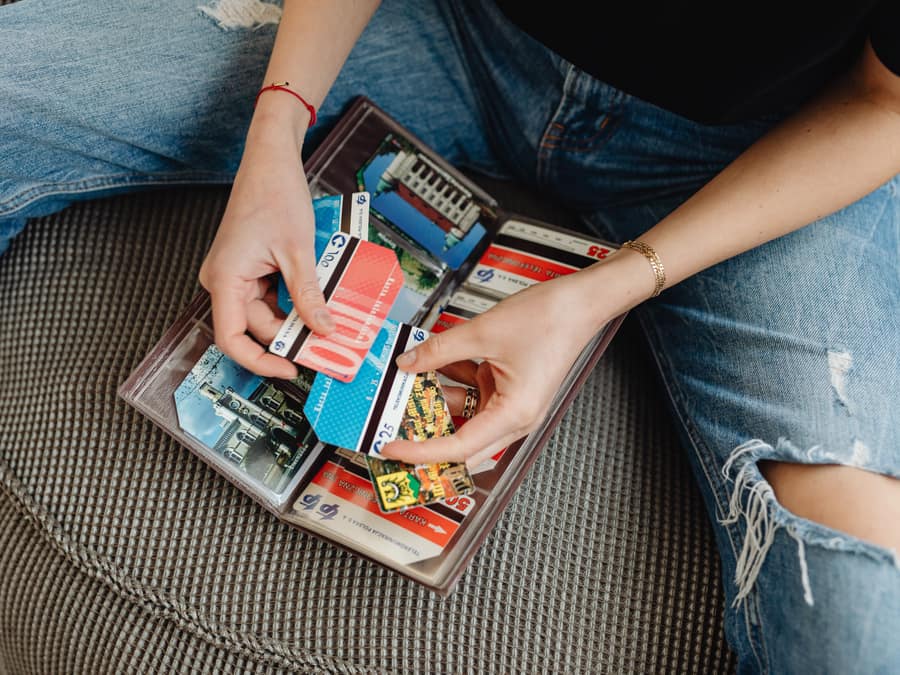
Two seconds per card for identification. Just do not mistake one for a condition record.
guide
How to Organize a Sports Card Collection
A system that takes thirty seconds at a time instead of an afternoon once a year.

Picks
Best Fireproof Card Storage
The only product category here that makes a published safety claim. Read the rating.
guide
What Cards Are Worth Grading
A filter you can run over a whole box, in order, with the cheap checks first.