
Best card scanners
Best Card Scanners
Three scanner types, one hard rule: never feed a card you care about.
See all 5 picks →
Stage 6 of the collection
Digitize the collection, then know what it is worth.
Disclosure: Slab & Stack is funded by affiliate commission. If you buy through a link on this page we may earn a commission at no extra cost to you, and that never changes which product we put first. How we pick · Full disclosure
There are two separate jobs here that get sold as one. Scanning is making an image — a record of what a card looked like on a given day, good enough to list it, submit it, or prove its condition later. Tracking is knowing what you own and roughly what it is worth. Different tools, different budgets, and buying the wrong one for your job is the most common mistake on this hub.
This is the one hard rule. A sheet-feed scanner passes the card between rollers, and rollers touch the surface. For commons being cataloged in the thousands that is an acceptable trade and a feeder is genuinely transformative. For a card you intend to grade, sell, or keep, it is not a trade at all — use a flatbed, where nothing but glass touches the card, or an overhead scanner, where nothing touches it whatsoever. The decision is laid out in flatbed vs ADF scanner for cards.
For identifying a card, pulling a rough market value and getting it into a list, a scanner app does in two seconds what a desktop scanner does in two minutes, and the best of them carry databases of tens of millions of cards. What an app does not give you is a controlled, repeatable image — the lighting changes with the room, and that makes it useless as a condition record. Use an app to catalog and a scanner to document.
A chrome card lying flat on a scanner mirrors the lamp straight back into the sensor, and the resulting glare hides exactly the surface detail you were trying to capture. A slab adds a second reflective surface on top of that. The fixes are mechanical rather than expensive — a slight angle, an overhead scanner, ambient light control — and they are collected in best scanner settings for cards, along with the resolutions that are actually worth using.
A collection tracker is not a toy. It is the thing that tells you, without opening a box, whether a card has moved enough to be worth grading, and it is the only practical record for insurance. The useful features are a database big enough to find your cards, a price history rather than a single current number, and an export you own. We cover the tools in best collection tracker apps and the valuation side in best card value lookup tools.
The value lookup closes the loop back to the start: a card worth more than you thought is a candidate for grading, and the whole cycle starts again.
Each list leads with the one to buy, and each tile links straight to the live listing for its top pick.
Best card scanners
Three scanner types, one hard rule: never feed a card you care about.
See all 5 picks →
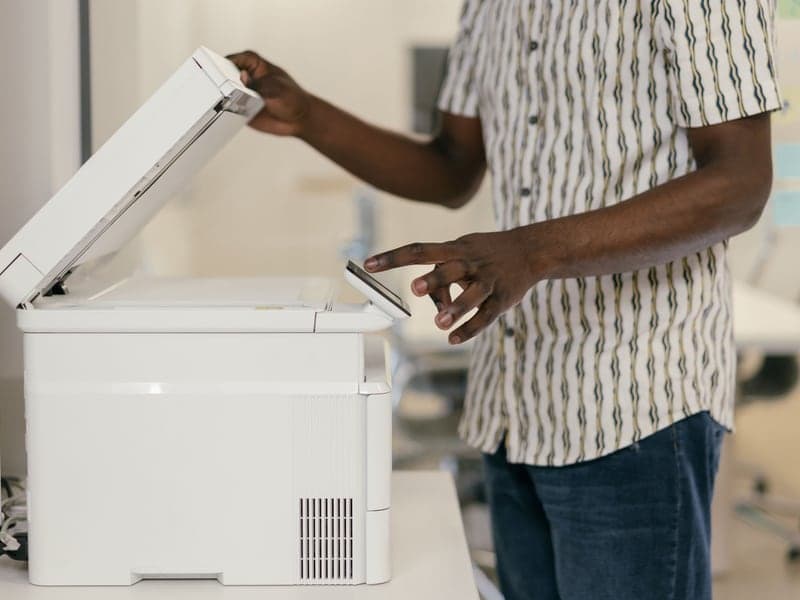
Best flatbed scanners
Nothing but glass touches the card. That is the entire argument, and it is a good one.
See all 4 picks →
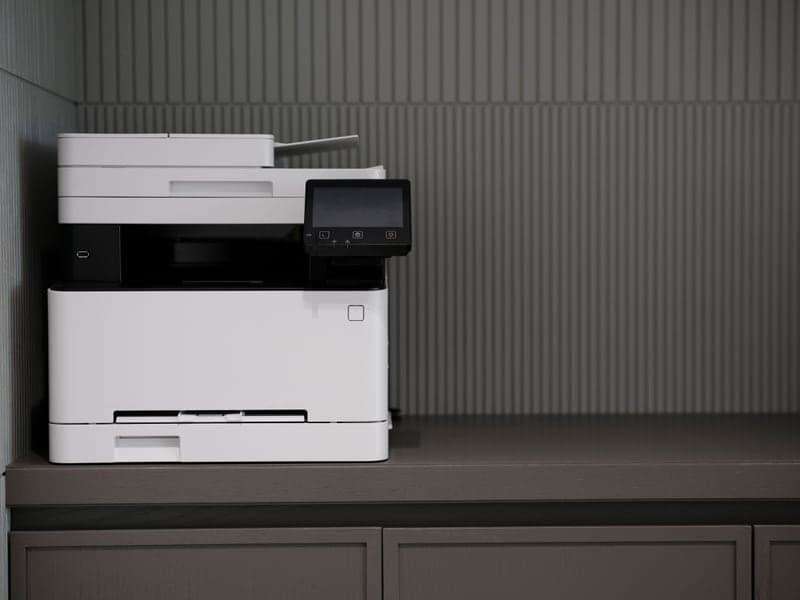
Best bulk scanners
Fast, duplex, and strictly for commons. The rule is not negotiable.
See all 4 picks →
Best scanner apps
Two seconds per card for identification. Just do not mistake one for a condition record.
See all 3 picks →

Best collection trackers
Not a toy. The record that tells you what to grade, what to sell and what you own.
See all 3 picks →
Best value lookup
Sold prices, not asking prices. Everything else follows from that one distinction.
See all 3 picks →
The questions that decide a purchase before you get to the product list.
Head to head
One touches the card. One does not. That decides almost everything.
Reference
The settings that make a scan a record rather than an interpretation.
Guide
A workflow you can repeat on card number four hundred without thinking about it.
Head to head
Speed against repeatability. They are not competing for the same job.
Guide
The project everyone starts and few finish. Here is the version that finishes.