Scanning & Tracking
How to Catalog a Card Collection
The project everyone starts and few finish. Here is the version that finishes.
By Brijon M. · Published October 6, 2026 · Last updated October 6, 2026

Disclosure: Slab & Stack is funded by affiliate commission. If you buy through a link on this page we may earn a commission at no extra cost to you, and that never changes which product we put first. How we pick · Full disclosure
The short answer
Sort first, catalog in batches, record location, and never catalog bulk
Cataloguing fails when people try to catalog everything at once, including cards that are not worth recording. Sort the collection physically first, record only what is worth recording, work box by box, and put the box location in every entry so the record points at a physical place.
A catalog is what turns a collection into something you can insure, value and make decisions about. It is also the project most collectors abandon halfway, almost always for the same two reasons: they tried to do it all at once, and they tried to catalog cards that were never worth recording.
The workflow
- Sort physically first. Cataloguing a disorganized collection means handling every card twice. Sort into labeled boxes, then catalog — how to organize a sports card collection.
- Decide what qualifies. Bulk and commons do not get cataloged individually. Record them as a line: 'approximately 3,000 commons, box 7'.
- Work one box at a time, start to finish, and stop at the end of a box rather than mid-section.
- Use an app for identification and a spreadsheet or tracker for the record, whichever you will actually maintain.
- Record the location in every entry — box number and divider section. A catalog that does not tell you where the card is is only half a catalog.
- Scan what matters as you go, and name the files consistently so the record can point at them.
- Back up the record somewhere that is not the device you made it on.
Quick picks
| # | Product | Best for | Price |
|---|---|---|---|
| 1 | E Epson Perfection V600 Photo Scanner Entries with proper scans attached are what an insurance claim and a future listing both need. For the images | High-quality flatbed card scans | Check price on Amazon |
| 2 | B BCW Tabbed Card Dividers A catalog entry that says which divider section a card is in is a catalog you will actually use. The link between digital and physical | Finding one card in a full box | Check price on Amazon |
| 3 | B BCW 800-Count Cardboard Storage Box One box at a time is a finishable task. A whole collection at once is not. The unit you catalog by | The default raw-card box | Check price on Amazon |
| 4 | UP Ultra Pro Platinum Soft Card Sleeves Cataloguing handles every card once. That is the moment to sleeve the ones that need it. Sleeve as you go | The default penny sleeve | Check price on Amazon |
#ad We earn a commission if you buy through these links, at no cost to you. Prices move constantly, so we link to the live listing instead of printing a number that would be wrong next week. How we are funded.
1. For the images
Epson Perfection V600 Photo Scanner
Epson · High-quality flatbed card scans
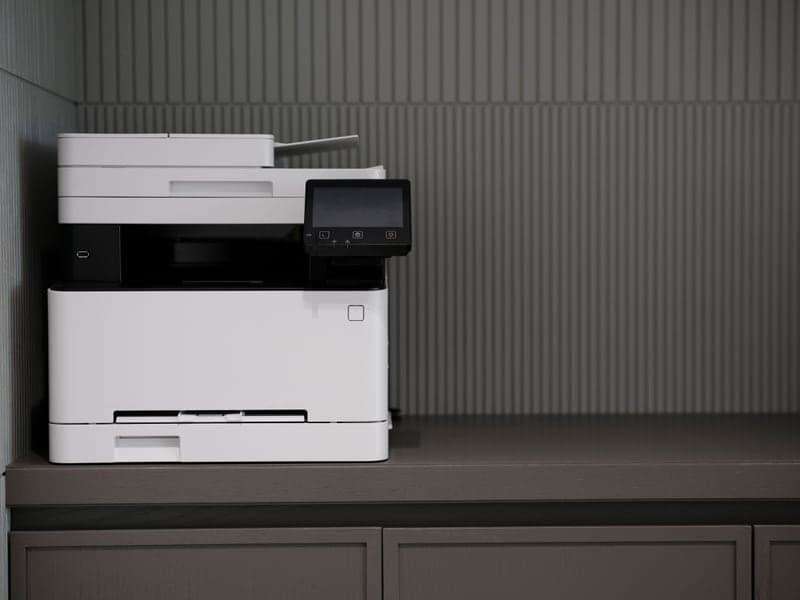
A flatbed is the right tool for cards, because nothing touches the card but glass. The V600 is the volume-sweet-spot model for listing photos and submission records.
Why it takes this slot: Entries with proper scans attached are what an insurance claim and a future listing both need.
- Type
- Flatbed photo scanner
- Use
- Listing images, grading records, archival scans
- Tradeoff
- Slower than a feed scanner, higher image quality
What it does well
- No rollers touch the card, which is the whole argument for flatbeds
- Image quality is good enough for listings and pre-submission records
- Scans slabs as well as raw cards
Where it falls short
- Slow — one platen at a time
- Desk footprint is real
- Overkill if you only ever need a phone snapshot
#ad We link to the listing rather than printing a price that would be wrong next week. How we are funded
2. The link between digital and physical
BCW Tabbed Card Dividers
BCW · Finding one card in a full box
Write-on tabs that stand above the cards. This is the difference between a box you can search and a box you dread opening.
Why it takes this slot: A catalog entry that says which divider section a card is in is a catalog you will actually use.
- Format
- Tabbed dividers with a write-on surface
- Fit
- Standard card storage boxes
- Pack size
- 10 and 25 count
What it does well
- The tab is what makes a box searchable without unloading it
- Acid-free board, so it can sit against cards
Where it falls short
- Tabs eat capacity in a tightly packed box
- Pen choice matters — ink can transfer
#ad We link to the listing rather than printing a price that would be wrong next week. How we are funded
3. The unit you catalog by
BCW 800-Count Cardboard Storage Box
BCW · The default raw-card box
White corrugated, 200 lb test, and the box the hobby measures storage in. Buy these in multipacks and label them; the count on the lid is the only organization system that survives contact with a growing collection.
Why it takes this slot: One box at a time is a finishable task. A whole collection at once is not.
- Stated capacity
- About 700 standard 20pt cards, or about 1,140 gaming cards
- Construction
- White corrugated paper, 200 lb test
- Format
- Two-piece box with lid
What it does well
- The published test strength is real — these stack without sagging
- Cheapest cost per card stored of any format
- Sold in multipacks, so a restock is one order
Where it falls short
- The nominal count assumes bare cards, not sleeved or held ones
- Cardboard gives you nothing against humidity
#ad We link to the listing rather than printing a price that would be wrong next week. How we are funded
4. Sleeve as you go
Ultra Pro Platinum Soft Card Sleeves
Ultra Pro · The default penny sleeve
Clear, acid-free, consistently cut, and sold everywhere in 100-count packs. It is the sleeve every other sleeve gets compared to, and the one PSA's guidance effectively asks for: clear, not opaque.
Why it takes this slot: Cataloguing handles every card once. That is the moment to sleeve the ones that need it.
- Size
- Standard 2 5/8" x 3 5/8" trading card
- Material
- Acid-free, PVC-free polypropylene
- Pack size
- 100 count, sold in multipacks
- Clarity
- Clear — grading-submission appropriate
What it does well
- Clear sleeve, which is what grading submissions require
- Consistent cut, so cards do not catch going in
- Cheap enough to sleeve a whole box without thinking about it
Where it falls short
- Thin by design — a sleeve is not protection on its own
- Static cling makes single-handed loading fiddly
#ad We link to the listing rather than printing a price that would be wrong next week. How we are funded
What to record
| Field | Why it earns its place |
|---|---|
| Year, set, player, number | Identification, and what buyers search |
| Parallel or variation | Where the value difference lives |
| Condition note | Your own words beat a number you did not assign |
| Purchase price and date | The only way to know whether you are up or down |
| Current value and date checked | An undated value is not information |
| Location | Box and divider — makes the record usable |
| Scan filename | Links the entry to the images |
| Status | Raw / submitted / graded / for sale |
Keeping it current
The same rule as sorting: do it at intake. New cards get cataloged the evening they arrive, in the same sitting where you decide which pile they belong to. A catalog updated at intake stays accurate forever; one updated in annual sessions is wrong for eleven months of the year.
Common questions
How do I catalog a large card collection?
Should I catalog every card?
App or spreadsheet?
How do I keep a catalog up to date?
Back to Scanning & Tracking.
Sources
About the author
Brijon M. is the hands-on owner behind MadGrey LLC and the person who writes and maintains every page on Slab & Stack. He buys supplies in bulk, submits cards for grading, and keeps this site's recommendations tied to what a working collection actually needs.
Brijon M. · Owner, MadGrey LLC · Read the full bio
Read next
Picks
Best Collection Tracker Apps
Not a toy. The record that tells you what to grade, what to sell and what you own.
guide
How to Scan Sports Cards
A workflow you can repeat on card number four hundred without thinking about it.
guide
How to Organize a Sports Card Collection
A system that takes thirty seconds at a time instead of an afternoon once a year.
Picks
Best Card Value Lookup Tools
Sold prices, not asking prices. Everything else follows from that one distinction.

Picks
Best Fireproof Card Storage
The only product category here that makes a published safety claim. Read the rating.

Picks
Best Sports Card Scanner Apps
Two seconds per card for identification. Just do not mistake one for a condition record.