Scanning & Tracking
Best Bulk Card Scanners
Fast, duplex, and strictly for commons. The rule is not negotiable.
By Brijon M. · Published October 6, 2026 · Last updated October 6, 2026
Disclosure: Slab & Stack is funded by affiliate commission. If you buy through a link on this page we may earn a commission at no extra cost to you, and that never changes which product we put first. How we pick · Full disclosure
The short answer
Ricoh fi-8170 for serious volume, ScanSnap iX1600 for home bulk
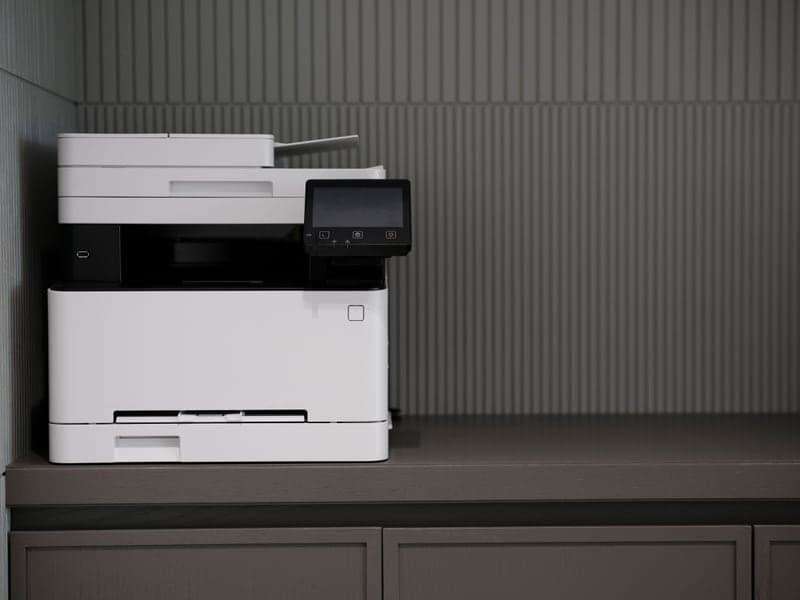
Feed scanners are the only practical way to catalog thousands of cards, with duplex capture getting front and back in one pass. The fi-8170 is commercial-grade at up to 70 pages per minute with a 100-sheet feeder; the iX1600 is the home-priced version. Neither should ever see a card you care about.
Bulk scanning exists for one job: turning thousands of low-value cards into a searchable digital record without spending a year on it. A feeder does that and a flatbed does not.
Quick picks
| # | Product | Best for | Price |
|---|---|---|---|
| 1 | R Ricoh fi-8170 Document Scanner Up to 70 pages per minute at 200/300 dpi with a 100-sheet ADF, duplex, and well supported by card workflows. Best overall for volume | Bulk raw-card digitizing | Check price on Amazon |
| 2 | R Ricoh ScanSnap iX1600 Duplex desktop scanning with a usable touchscreen workflow at a fraction of commercial pricing. Best home-priced feeder | A feed scanner that is not commercial-priced | Check price on Amazon |
| 3 | E Epson FastFoto FF-680W Built for photo batches, which makes it quick on thin modern cards, front and back in one pass. Best for thin, flat stock | Fast two-sided scanning of thin stock | Check price on Amazon |
| 4 | R Ricoh ScanSnap SV600 Overhead and contactless — slower than a feeder, and the only fast-ish option that touches nothing. The safe alternative for valuable cards | Contactless scanning of valuable cards | Check price on Amazon |
#ad We earn a commission if you buy through these links, at no cost to you. Prices move constantly, so we link to the live listing instead of printing a number that would be wrong next week. How we are funded.
1. Best overall for volume
Ricoh fi-8170 Document Scanner
Ricoh · Bulk raw-card digitizing
A commercial duplex scanner with a 100-sheet feeder, widely used for bulk card workflows. It is fast and it is a feeder, which means it is for commons and never for your best card.
Why it takes this slot: Up to 70 pages per minute at 200/300 dpi with a 100-sheet ADF, duplex, and well supported by card workflows.
- Speed
- Up to 70 pages per minute at 200/300 dpi per the manufacturer
- Feeder
- 100-sheet ADF
- Scanning
- Duplex — both sides in one pass
What it does well
- Duplex capture means front and back in a single pass
- The fastest practical way to catalog thousands of commons
- Well supported by card cataloging workflows
Where it falls short
- Rollers touch every card — never feed a card you care about
- Thick, warped or slabbed cards will not feed
- Commercial pricing
#ad We link to the listing rather than printing a price that would be wrong next week. How we are funded
2. Best home-priced feeder
Ricoh ScanSnap iX1600
Ricoh · A feed scanner that is not commercial-priced
The well-known desktop feed scanner. It will move bulk cards quickly and it carries the same hard rule as every feeder: commons only.
Why it takes this slot: Duplex desktop scanning with a usable touchscreen workflow at a fraction of commercial pricing.
- Type
- Duplex sheet-feed desktop scanner
- Interface
- Touchscreen with Wi-Fi
- Use
- Bulk commons cataloging
What it does well
- Much cheaper than commercial feeders
- Duplex, with a usable touchscreen workflow
Where it falls short
- Card stock is not paper — expect misfeeds and never feed a good card
- No contactless mode
#ad We link to the listing rather than printing a price that would be wrong next week. How we are funded
3. Best for thin, flat stock
Epson FastFoto FF-680W
Epson · Fast two-sided scanning of thin stock
Built for photo batches, which makes it quick on thin modern cards and front-and-back in one pass. Same feeder caveat applies.
Why it takes this slot: Built for photo batches, which makes it quick on thin modern cards, front and back in one pass.
- Type
- Sheet-feed photo scanner
- Scanning
- Two-sided in a single pass
- Use
- Volume scanning of thin, flat cards
What it does well
- Genuinely fast on thin, flat stock
- Captures both sides in one pass
Where it falls short
- A feeder, so not for premium or warped cards
- Thick cards will jam
#ad We link to the listing rather than printing a price that would be wrong next week. How we are funded
4. The safe alternative for valuable cards
Ricoh ScanSnap SV600
Ricoh · Contactless scanning of valuable cards
An overhead scanner: nothing touches the card at all. That makes it the one fast-ish option that is safe for premium raw cards and for slabs.
Why it takes this slot: Overhead and contactless — slower than a feeder, and the only fast-ish option that touches nothing.
- Type
- Overhead contactless scanner
- Contact
- No rollers, no platen pressure
- Use
- Premium raw cards, slabs, thick stock
What it does well
- Zero physical contact with the card
- Scans slabs without the glare problems of a flatbed lid
- Faster than a flatbed for a run of singles
Where it falls short
- Ambient light control matters, so it needs a considered spot
- Image quality trails a good flatbed
- Expensive for a home collection
#ad We link to the listing rather than printing a price that would be wrong next week. How we are funded
What a feeder does to a card
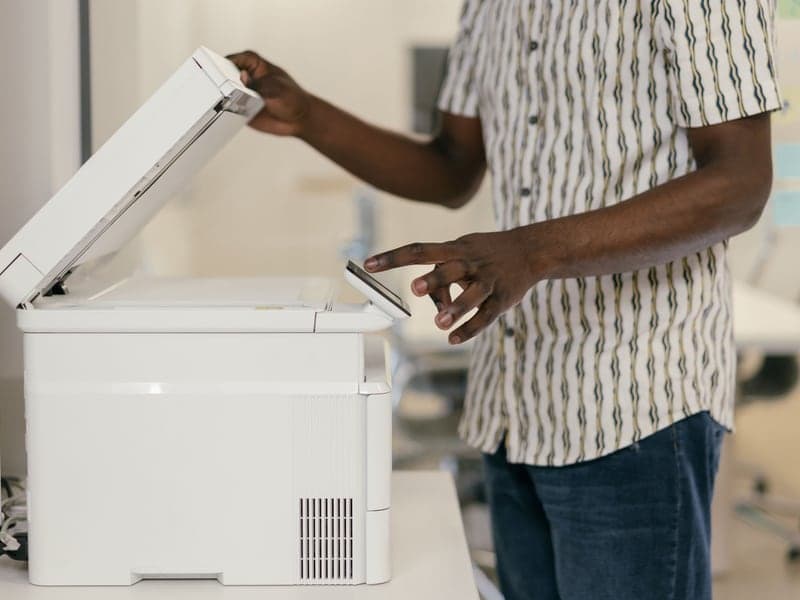
It pulls it between rollers that touch both faces. On paper that is harmless. On card stock it means surface contact under pressure, repeated for every card, and card stock is also thicker, stiffer and more prone to jamming than the paper these machines were designed around.
The consequences are predictable: occasional misfeeds, occasional double-feeds, and surface marking on cards that already had a soft gloss. For commons being cataloged at volume, that is a reasonable trade. For anything else it is not.
What will not feed at all
- Thick cards — patch and relic stock will jam or will not pick up.
- Warped cards, which double-feed or skew.
- Slabs, obviously — use an overhead scanner.
- Cards in sleeves or holders, which have to come out first, adding handling.
- Anything valuable, as a matter of policy rather than mechanics.
Throughput maths
A machine rated at up to 70 pages per minute does not hit that on cards, because loading, misfeed recovery and file handling eat into it. Even at a fraction of the rated speed, the difference against a flatbed — which is one card at a time with a lid — is the difference between a weekend and a year.
Common questions
Can you bulk scan trading cards?
What is the fastest way to scan a lot of cards?
Will thick cards go through a feed scanner?
Is there a safe fast option?
Back to Scanning & Tracking.
Sources
About the author
Brijon M. is the hands-on owner behind MadGrey LLC and the person who writes and maintains every page on Slab & Stack. He buys supplies in bulk, submits cards for grading, and keeps this site's recommendations tied to what a working collection actually needs.
Brijon M. · Owner, MadGrey LLC · Read the full bio
Read next


guide
How to Catalog a Card Collection
The project everyone starts and few finish. Here is the version that finishes.
Picks
Best Flatbed Scanners for Cards
Nothing but glass touches the card. That is the entire argument, and it is a good one.
guide
How to Sort Sports Cards
Two passes beat one. Here is the method that works on a thousand cards.
reference
Best Scanner Settings for Cards
The settings that make a scan a record rather than an interpretation.