Grading & Submission
PSA Sports Card Grading
The whole process, start to finish, with the 2026 numbers and the tier that is closed.
By Brijon M. · Published October 15, 2026 · Last updated October 15, 2026

Disclosure: Slab & Stack is funded by affiliate commission. If you buy through a link on this page we may earn a commission at no extra cost to you, and that never changes which product we put first. How we pick · Full disclosure
The short answer
PSA authenticates, grades 1 to 10 and seals the card — and its cheap tiers are currently paused
PSA is the largest sports card grading company, and a PSA slab carries the broadest resale market of any grader. You send a raw card in a clear sleeve inside a semi-rigid holder; PSA authenticates it, grades centering, corners, edges and surface on a 1-to-10 scale, and returns it sealed in a tamper-evident holder with a cert number. The catch in 2026 is cost and access: PSA paused new submissions on all four Value service levels on 2 June 2026, so the cheap routes in are closed and the entry tier is a reported $59.99 per card.
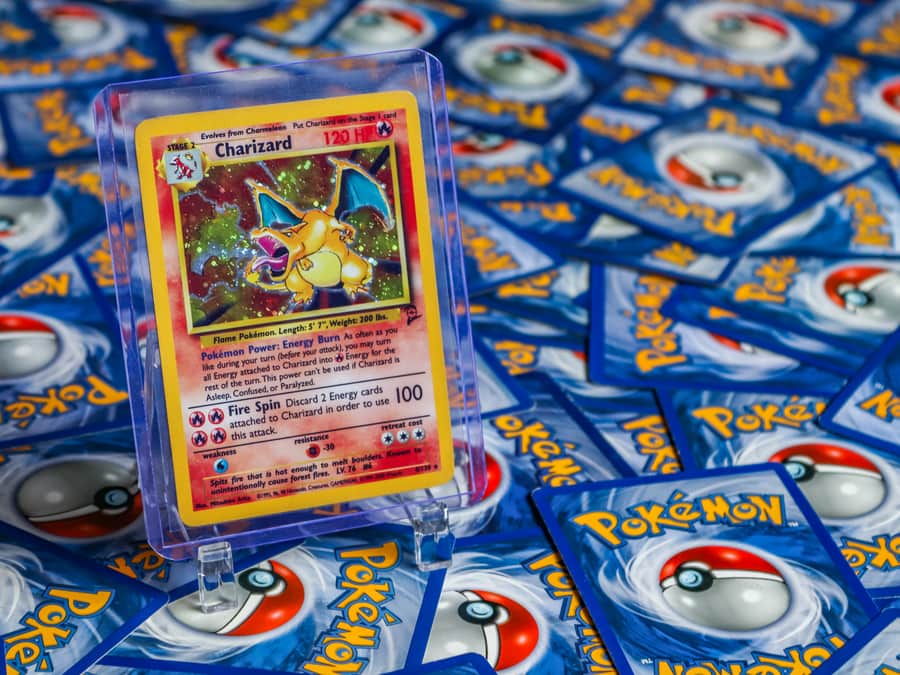
PSA grading is the process of sending a raw card to Professional Sports Authenticator, which authenticates it, assigns a condition grade from 1 to 10, and returns it sealed in a tamper-evident plastic holder — a slab — carrying that grade and a unique certification number. PSA is the largest of the grading companies and its slab reaches the widest pool of buyers, which is why most collectors who grade at all grade with PSA.
This page is the whole process in order: what the grade means, what it costs right now, how long it takes, what you need to send a card, and whether it is worth doing at all. Each step links to the page that covers it in full detail.
What PSA actually does to a card
Three distinct things, and it is worth separating them because people conflate them. First, authentication: PSA confirms the card is genuine and unaltered. Second, grading: it assesses condition and assigns a number. Third, encapsulation: it seals the card in a holder that cannot be opened without visible damage, so the grade travels with the card.
The third part is the one that creates most of the value. A raw card's condition is a matter of opinion between buyer and seller; a slabbed card's condition is a fact attached to a cert number that anyone can look up. That is what a buyer is paying a premium for, and it is why grading can be worth more than the card's physical condition alone would suggest.
What the grade means
PSA grades on a ten-point scale. PSA 10 is Gem Mint and PSA 1 is Poor, with published labels at every step between. Half grades run from 1.5 up to 8.5 — and critically, there is no PSA 9.5, so a card goes straight from Mint 9 to Gem Mint 10.
| Grade | Label | Roughly |
|---|---|---|
| PSA 10 | Gem Mint | Flawless to the naked eye, centering inside PSA's threshold |
| PSA 9 | Mint | One minor flaw — slight centering, a tiny print spot |
| PSA 8 | NM-MT | Very presentable with a visible minor defect or two |
| PSA 7 | NM | Light wear on inspection, still clean-looking |
| PSA 5-6 | EX / EX-MT | Clear corner and edge wear |
| PSA 2-4 | Good / VG / VG-EX | Obvious wear, creasing common at the bottom of this band |
| PSA 1-1.5 | Poor / Fair | Major damage — heavy creasing, tears, missing material |
Labels as published by PSA. Full scale, half-grade rules and the qualifier codes are in the PSA grading scale explained.
That missing 9.5 is the most financially consequential fact in grading. Every card better than a clean 9 but short of Gem Mint lands on 9, and on a sought-after modern card the price gap between a 9 and a 10 is routinely a multiple rather than a margin. The full scale, how half grades are awarded and what the OC, ST, PD, MK and MC qualifiers mean are in the PSA grading scale explained.
What PSA grades on
Four attributes: centering, corners, edges and surface. The grade is a composite, and in practice the weakest attribute sets the ceiling — immaculate corners do not rescue a card with a visible surface scratch.
Centering is the one you can measure objectively at your own desk with an acrylic gauge, and it is the most common single reason a card misses a 10. That makes pre-screening the highest-return habit available to anyone submitting cards: see best card centering tools.
Quick picks
| # | Product | Best for | Price |
|---|---|---|---|
| 1 | CG Cardboard Gold Card Saver 1 PSA's shipping guide names a semi-rigid at 3 5/16" by 4 7/8" and lists toploaders among the things not to send. This is that holder. The holder PSA asks for | Standard modern cards going to PSA | Check price on Amazon |
| 2 | UP Ultra Pro Platinum Soft Card Sleeves A clear penny sleeve goes inside the semi-rigid. Clear is the actual requirement — opaque or colored sleeves cause delays. Required, and trivial | The default penny sleeve | Check price on Amazon |
| 3 | L Luxiv Card Grading Centering Tool Kit At a reported $59.99 a card, the best saving available is grading fewer cards. A gauge and a loupe catch the ones that were never going to come back well. The cheapest way to spend less | Pre-screening centering before you pay a fee | Check price on Amazon |
| 4 | HA Hobby Armor Trading Card Shipping Protectors Corrugated pads either side of the stack are what stop a submission being bent in transit. Skipping them is how a card arrives worse than it left. The layer that protects the trip | The rigid sandwich inside the mailer | Check price on Amazon |
#ad We earn a commission if you buy through these links, at no cost to you. Prices move constantly, so we link to the live listing instead of printing a number that would be wrong next week. How we are funded.
1. The holder PSA asks for
Cardboard Gold Card Saver 1
Cardboard Gold · Standard modern cards going to PSA
The semi-rigid holder PSA's own shipping guide points you toward, at the size its instructions name. If you submit standard-thickness modern cards, this is the default and the decision is made.
Why it takes this slot: PSA's shipping guide names a semi-rigid at 3 5/16" by 4 7/8" and lists toploaders among the things not to send. This is that holder.
- Holder size
- 3 5/16" x 4 7/8"
- Card thickness
- Standard cards up to roughly 20pt
- Material
- Acid-free, PVC-free rigid vinyl
- Common pack sizes
- 50, 100 and 200 count
What it does well
- Matches the semi-rigid dimensions PSA's shipping guide specifies
- Consistent fit from pack to pack, which matters when you are loading 200 cards
- Thin enough to band and ship in bulk without a bulky box
Where it falls short
- A snug fit — a thick or already-curved card needs care going in
- Priced above generic semi-rigids precisely because it is the submission standard
#ad We link to the listing rather than printing a price that would be wrong next week. How we are funded
2. Required, and trivial
Ultra Pro Platinum Soft Card Sleeves
Ultra Pro · The default penny sleeve
Clear, acid-free, consistently cut, and sold everywhere in 100-count packs. It is the sleeve every other sleeve gets compared to, and the one PSA's guidance effectively asks for: clear, not opaque.
Why it takes this slot: A clear penny sleeve goes inside the semi-rigid. Clear is the actual requirement — opaque or colored sleeves cause delays.
- Size
- Standard 2 5/8" x 3 5/8" trading card
- Material
- Acid-free, PVC-free polypropylene
- Pack size
- 100 count, sold in multipacks
- Clarity
- Clear — grading-submission appropriate
What it does well
- Clear sleeve, which is what grading submissions require
- Consistent cut, so cards do not catch going in
- Cheap enough to sleeve a whole box without thinking about it
Where it falls short
- Thin by design — a sleeve is not protection on its own
- Static cling makes single-handed loading fiddly
#ad We link to the listing rather than printing a price that would be wrong next week. How we are funded
3. The cheapest way to spend less
Luxiv Card Grading Centering Tool Kit
Luxiv · Pre-screening centering before you pay a fee
An acrylic centering guide plus a 30x magnifier and cloths. Centering is the single most common reason a card misses a 10, and this is the cheapest way to find that out before you pay for grading.
Why it takes this slot: At a reported $59.99 a card, the best saving available is grading fewer cards. A gauge and a loupe catch the ones that were never going to come back well.
- Contents
- Acrylic centering guide, 30x magnifier, two microfiber cloths
- Material
- Transparent acrylic
- Works with
- PSA, BGS and CGC centering standards
What it does well
- Catches an off-center card before a submission fee is spent on it
- The magnifier doubles as your surface and edge check
- Costs a fraction of one grading fee
Where it falls short
- Measuring by eye on a gauge is less precise than a scan-based measurement
- Does nothing for surface or edge wear on its own
#ad We link to the listing rather than printing a price that would be wrong next week. How we are funded
4. The layer that protects the trip
Hobby Armor Trading Card Shipping Protectors
Hobby Armor · The rigid sandwich inside the mailer
Two corrugated pads either side of the holder. This is the layer that stops a sorting machine bending the package, and it is the one most sellers skip.
Why it takes this slot: Corrugated pads either side of the stack are what stop a submission being bent in transit. Skipping them is how a card arrives worse than it left.
- Material
- Corrugated cardboard
- Use
- One pad either side of a toploader or slab
- Sold in
- Size-specific packs for raw cards and for graded slabs
What it does well
- Corrugation resists bending across the flat face, which is the damage mailers do not stop
- Adds almost no weight, so it does not move you into a higher postage band
- Cut to card and slab footprints, so no trimming cardboard by hand
Where it falls short
- Stocked by hobby sellers rather than every big-box retailer
- Pointless on its own — it is a layer inside a padded mailer, not a mailer
#ad We link to the listing rather than printing a price that would be wrong next week. How we are funded
What it costs in 2026
PSA sells service levels, and each bundles a price per card, a maximum declared value it will insure, and an estimated turnaround. The grading itself is identical at every level — what you buy by paying more is speed and insurance coverage, not a more careful look at your card.
| Tier | Reported price per card | Status / turnaround |
|---|---|---|
| Value Bulk | $24.99 | Paused to new submissions from 2 June 2026 |
| Value | $32.99 | Paused to new submissions |
| Value Plus | $49.99 | Paused to new submissions |
| Value Max | $64.99 | Paused to new submissions |
| Standard | $59.99 | 90-100 business days, $1,000 max insured value |
Secondary-source figures, attributed and dated at the foot of this page. Value Bulk additionally required Collectors Club membership and, from 18 May 2026, a 50-card minimum.
So the correct tier is the cheapest open one whose declared-value cap sits above your card's value. The full structure, including the faster Priority, Express and Premier levels and their caps, is in PSA grading cost. Turnaround specifically is in PSA turnaround times.
Two costs the per-card fee does not include: insured shipping in both directions, and PSA Collectors Club membership, reported at $149 a year, which the paused Value tiers required. For someone submitting five cards a year that membership can exceed the grading bill, which is a real part of the arithmetic.
The bulk route, and what replaced it
Value Bulk was the tier that made grading large numbers of low-to-mid-value cards arithmetically possible. It closed, and nothing has replaced it at that price. If you came looking for it, the PSA bulk submission guide covers what it was, what the terms had become by the time it closed, and the three realistic options now.
The short version of those options: send genuinely mid-value cards to SGC, whose Standard service is reported at $50 per card up to a $1,500 declared value with no membership requirement; send only the few cards that clear a reported $59.99 to PSA Standard; and store the rest properly while you wait. Comparisons are in SGC grading cost and PSA vs SGC, and the supply list in best SGC submission supplies.
How to submit a card
The physical requirements are simple and non-negotiable. PSA's shipping guide asks for each card in a clear penny sleeve, then into a semi-rigid holder at 3 5/16" by 4 7/8" for a standard card, and it explicitly lists toploaders alongside tape, pull tabs and sticky notes among the things not to use.
- Decide which cards justify the fee, and screen the rest out before you pay for anything.
- Pre-screen the survivors: measure centering with a gauge and check corners, edges and surface under magnification.
- Sleeve each card in a clear penny sleeve, opening facing the closed end of the holder.
- Slide each sleeved card into a semi-rigid holder — a Card Saver 1 for standard cards, a Card Saver 4 for thick patch and relic stock.
- Complete the submission form, choose the service level, and declare a value you can justify.
- Order the holders to match the form exactly, band them into stacks, and sandwich them between cardboard protectors.
- Pack into a rigid box with the void filled, insure for your declared value, and keep the tracking number.
Each of those steps has a page. Holders: best card savers for PSA. The full supply list: best PSA submission supplies. Packing: how to package cards for PSA. Shipping and insurance: how to ship cards to PSA. For a thick card, the sleeve that goes inside the CS4 is covered in best penny sleeves for thick cards.
Is it worth grading
Only when the expected graded value, minus the fee and shipping both ways, beats what the raw card sells for today. At a reported $59.99 entry fee that bar is high, and it rules out the large majority of cards in a typical collection — a $59.99 fee on a $40 card destroys value no matter what grade comes back.
The cards that clear it reliably share a profile: real raw value, a plausible shot at a 9 or 10, and a player or set with an active resale market. Work through that honestly with is card grading worth it, what cards are worth grading and when to grade a card.
If PSA turns out not to be the right grader for a given card, the alternatives are compared in best card grading company, PSA vs SGC, PSA vs CGC and PSA vs BGS.
After it comes back
A slab is rigid, sealed and inert, which makes it excellent storage — but the case itself scratches, and a scuffed holder on a high-grade card is a real deduction to a buyer. Slab sleeves and bags exist for exactly this: best slab sleeves and bags.
From there it is a display or storage decision — how to display graded cards and how to store graded cards — and worth scanning for your own records before it goes anywhere, since the cert number is the field that uniquely identifies it: how to scan graded cards.
Common questions
What is PSA sports card grading?
How much does PSA grading cost in 2026?
How long does PSA take to grade a card?
What do I need to send a card to PSA?
Is there a PSA 9.5?
Can I still do a PSA bulk submission?
Is PSA better than SGC or BGS?
Back to Grading & Submission.
Sources
- PSA Shipping Guide — sleeving, holder requirements and materials not to use
- PSA — Introducing PSA Half Grades (half-point grading and qualifier rules)
- PSA — $200 million infrastructure investment to support global demand
- Sports Illustrated — PSA increases turnaround times and minimum for Value Bulk submissions
- CardPulse — PSA's May 2026 grading changes: new prices and wait times
- PSA — certification lookup
About the author
Brijon M. is the hands-on owner behind MadGrey LLC and the person who writes and maintains every page on Slab & Stack. He buys supplies in bulk, submits cards for grading, and keeps this site's recommendations tied to what a working collection actually needs.
Brijon M. · Owner, MadGrey LLC · Read the full bio
Read next
reference
PSA Grading Cost
What the tiers are, what drives the price, and why the number moved three times this year.
reference
PSA Grading Scale Explained
Ten numbers, seven half grades, six qualifiers — and one of them halves a card's value.

reference
PSA Turnaround Times
Estimates in business days, what moves them, and how to plan around a queue.
Picks
Best Card Savers for PSA Submission
PSA's own guidance names the holder. These are the ones worth buying by the hundred.
guide
PSA Bulk Submission Guide
The cheap tier you are looking for is paused. Here is the honest state of play.